
Section outline
-
Hi everyone! Welcome back to our microbiology class. Today we’re going to discover what makes bacteria unique, what they look like inside and out, and how we group them based on their shapes and characteristics.
2.1 Topic Learning Outcome
At the end of this lesson, you will be able to:
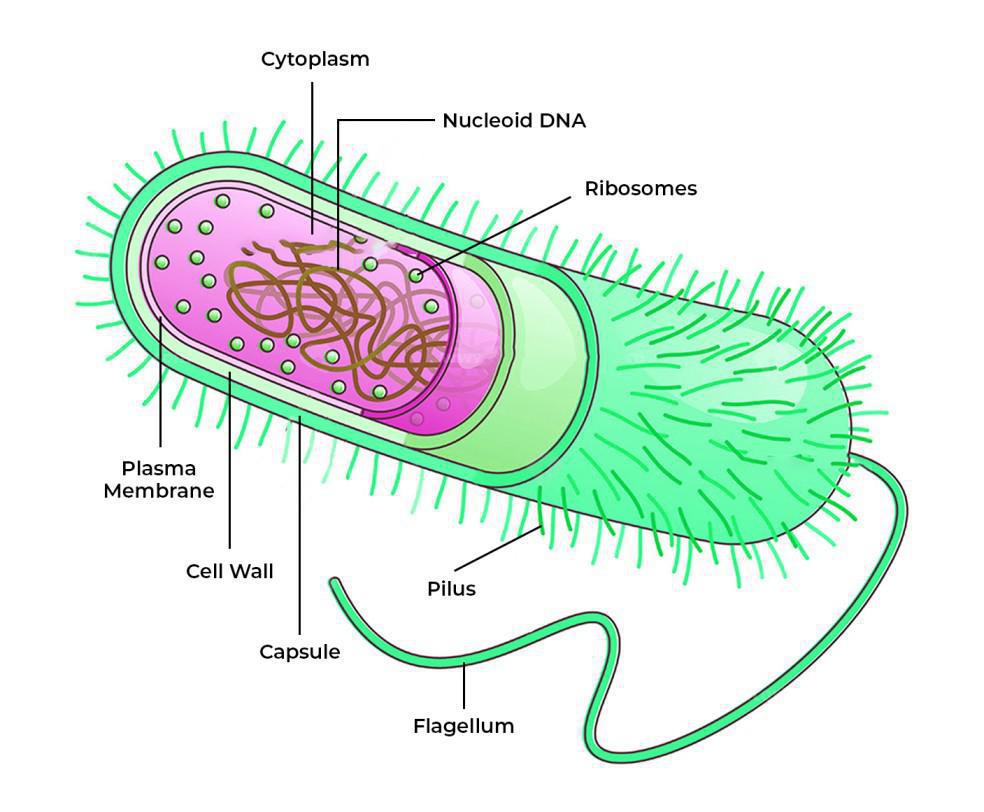
2.1.1 Draw and label the basic structure of a bacterial cell.
2.1.2 Explain the functions of each bacterial cell component (e.g., capsule, flagella, pili).
2.1.3 Classify bacteria based on their shapes and arrangements.
2.1.4 Explain the difference between Gram-positive and Gram-negative bacteria.
2.1.5 Describe the formation and significance of bacterial endospores.2.2.1 Introduction to bacteria2.2.2 Structure of bacteria cell2.2.3 Bacteria shape and arrangement2.2.4 Gram staining and cell wall differences2.2.5 Bacteria endospore2.3 Video LectureYou will watch a lecture video for more explanation about the topic: Bacteria Structure and Classification(Duration: 11:17 mins)Gram-negative vs Gram-positive bacteria-
After watching the video, now let’s try to answer these questions:1. Which part of a bacterial cell do you think is the most important? Why?2. How are Gram-positive and Gram-negative bacteria different in color after Gram staining?3. Why do you think bacteria make endospores?
-
Activity
Please study the image of the bacterial cell provided. Then, drag the labels to the correct structures in the image. Match each numbered part with the correct name of the structure.
-
Activity
To enhance your understanding of bacterial structure and staining differences, please carefully read the provided tutorial. Then, fill in the blanks with the correct answers based on the information in the tutorial.
-
Activity
- Download and read the uploaded instructions for Gram Staining Virtual Simulation (in PDF file)
- Click the simulation link: https://learn.chm.msu.edu/vibl/content/gramstain.html
-
Assessment
Complete the self-assessment quiz on Bacterial Structure and Classification to evaluate your understanding of the topic.
-