
Section outline
-
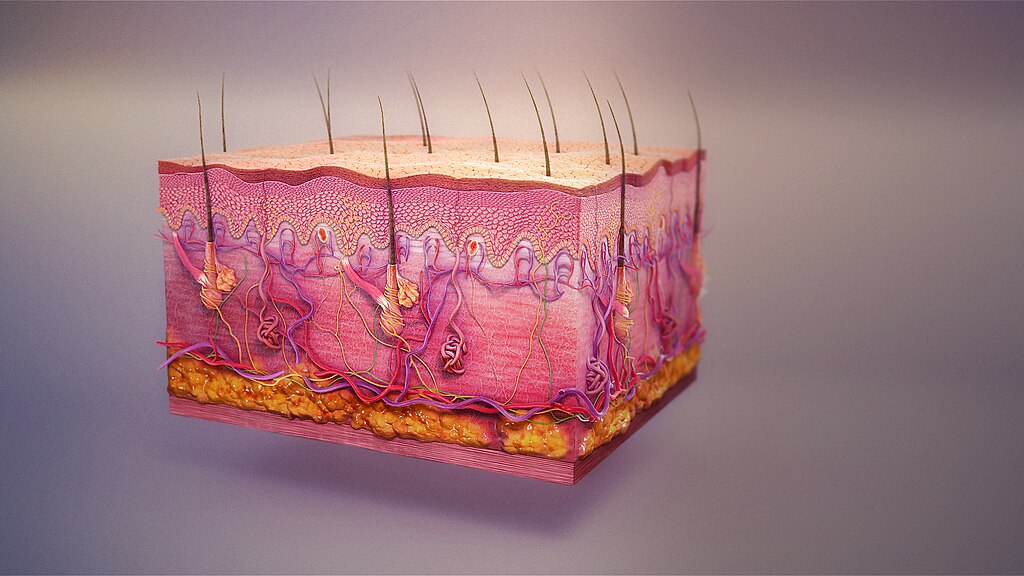
The integumentary system is our body’s first line of defense—a dynamic shield that protects, regulates, and communicates with the outside world. Think of it as your body’s armor, thermostat, and communication hub all rolled into one. From shielding us against harmful invaders to helping us sense a gentle touch or the sting of a burn, the skin and its accessory structures play a vital role in maintaining life and health. Did you know that your skin is the largest organ you have? Or that it regenerates itself entirely every 4–6 weeks? Therefore for this topic, we’ll uncover the layers, functions, and remarkable adaptations of this system—and why disruptions to it (like burns, infections, or aging) can have profound effects on overall well-being. So, let’s begin our journey—from the surface you see in the mirror down to the microscopic wonders beneath!
7.1 Topic Learning Outcomes
By the end of this lesson, you should be able to:
7.1.1 Describe the structures and functions of the skin
7.1.2 Describe the functions of the hair and nails
7.1.3 Describe the functions of the secretions of sebaceous glands and exocrine sweat glands
7.2 List of Subtopics
7.2.1 Introduction to Integumentary System
7.2.2 Structures of the Skin
7.2.2.1 Epidermis
7.2.2.2 Dermis
7.2.3 Subcutaneous Layer
7.2.4 Sweat Glands
7.2.5 Hairs
7.2.6 Sebaceous Glands
7.2.7 Nails
7.2.8 Functions of the Skin7.3 Video LectureWatch the video assigned for this topic: The Integumentary System
(Duration: 9:33 mins)-
For further details, consult the accompanying lecture slides and recommended readings
-
Instruction: Guess the answer based on the given description related to integumentary system. Turn the card when you are ready to see the answer.
-
Topic: Skin Cancer Prevention: Targeted Public Health CampaignObjectives:
- Collaborate in small groups to create a visual storytelling campaign for public education.
- Apply integumentary system knowledge to real-world health communication.
- Tailor scientific information for specific demographics.
- Risk factors (e.g., UV exposure, skin type)
- Prevention strategies (e.g., sunscreen, clothing)
- Early detection (ABCDE rule, self-exams)
- Myth-busting (e.g., "Dark skin doesn’t burn")
Infographic Title:- For Athletes: "Sweat-Proof Sunscreen: Why Marathoners Get More Melanoma"
- For Elderly: "Spotting Skin Cancer After 60: It’s Not ‘Just Age Spots’"
- For Teens: "TikTok Tanning Trends vs. Reality"
- For Outdoor Workers: "Sun Safety on the Job: A Guide for Outdoor Workers"
-